Comparing categories as well as this product? Visit our weight loss protein guide or browse the low-carb protein hub for broader buying advice and related picks.
At a glance
A quick summary for readers who want the shape of the product before reading the full review.
- Protein type
- Diet-focused whey blend
- Best suited for
- Weight-management routines and lighter shakes
- Format
- Protein powder shake
- Key consideration
- Goal-led blend positioned around leaner dieting use-cases
Quick verdict
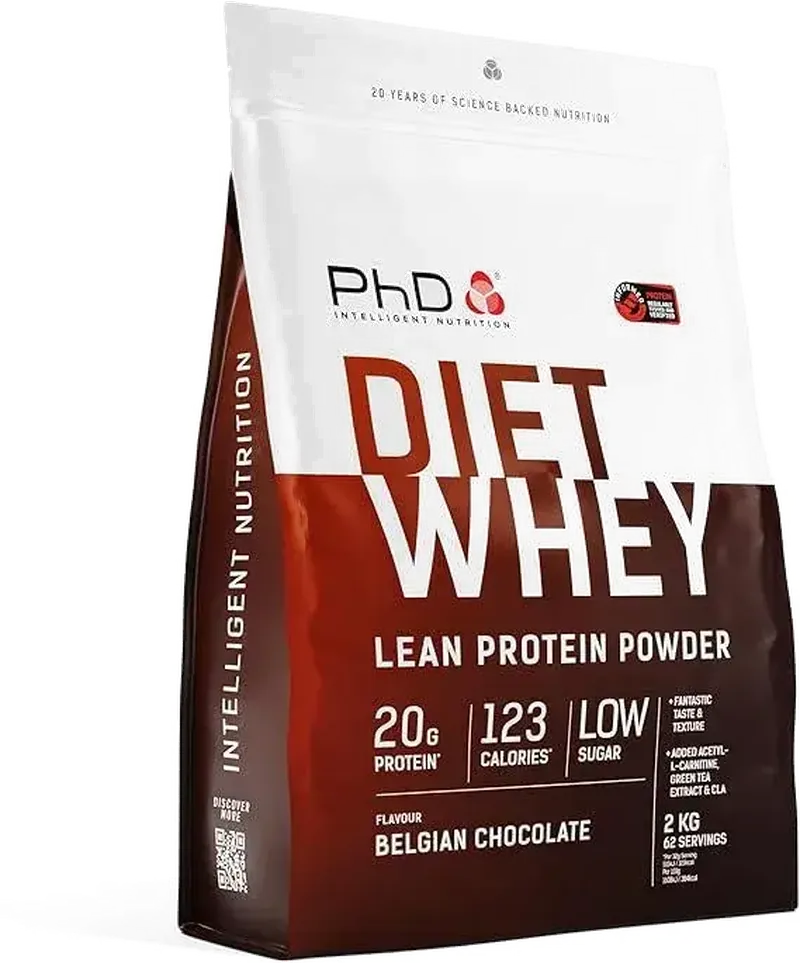
Diet Whey blends whey protein concentrate, soya protein isolate and milk protein concentrate with added green tea extract, L‑carnitine, CLA and flaxseed. The current Belgian Chocolate label lists 20 g protein and 123 kcal per 32 g serving. It is a versatile product positioned for people balancing protein intake with calorie goals, but it is not a pure whey-isolate formula.
How we review
At Protein Pitstop, reviews are based on editorial research — not product trials. We assess:
- Ingredient profiles and nutrition labels
- Customer feedback and Amazon reviews
- Brand reputation and transparency
- Suitability for different dietary preferences
We do not accept free products or sponsorships, and affiliate commissions never affect our recommendations.
Ingredient snapshot
Before looking at the finer detail, these are the headline formula characteristics worth knowing.
- Whey-led blend positioned for diet and leaner routines
- Often considered by shoppers comparing lighter protein formats
- More goal-led than a generic everyday whey tub
Nutrition & ingredients
The current Belgian Chocolate label gives 20 g protein, 3.9 g carbohydrate, 0.9 g sugars and 2.7 g fat per 32 g serving. The protein blend uses whey protein concentrate, soya protein isolate and milk protein concentrate. Added green tea extract, L‑carnitine, CLA and flaxseed are included, alongside vitamins and minerals. Sweeteners include sucralose and acesulfame K.
Taste & mixability
Flavours like Chocolate Mint and Vanilla Crème are well‑reviewed by customers for their dessert‑like taste. The texture is thicker than standard whey due to oats, which some users find more filling. It mixes smoothly in a shaker with minimal foam.
Use cases
Diet Whey is marketed for calorie‑controlled diets and lean muscle maintenance. Customer reviews suggest it can be filling as a snack or convenient shake between meals. The current 20 g protein serving is useful, but it should be compared against other powders on an equal serving-size basis.
Value
PHD Diet Whey sits between budget concentrates and premium isolates. Customers often highlight its flavour and satiety benefits, while acknowledging it’s not the highest protein‑per‑scoop option.
Pros & cons
Pros
- 20 g protein and 123 kcal per 32 g serving
- Includes added vitamins and functional ingredients
- Thick, filling texture with sweet flavours
Cons
- Lower protein than many whey powders
- Contains soy and artificial sweeteners
- Added “fat‑burning” ingredients not strongly supported by research
Who this protein may suit
May suit:
- People comparing protein powders during weight-management phases
- Shoppers who want a lighter, more diet-positioned shake
- Users looking for a protein option that feels more goal-specific
May not suit:
- Anyone who wants a simple no-frills whey tub
- People after a high-calorie mass gainer
- Users who need a vegan protein alternative
How it compares
Diet Whey sits closer to the weight-management end of the category, so comparisons with leaner blends and lower-calorie options are often more useful than broad whey comparisons alone.
For broader context, compare it within our weight loss protein guide and then browse the low-carb protein hub.
FAQs
Is PHD Diet Whey suitable for vegetarians?
Yes. It is suitable for vegetarians but contains milk and soy proteins, so it’s not suitable for vegans.
Can Diet Whey help me lose weight on its own?
No supplement can replace a balanced diet and exercise regimen. Diet Whey can support weight‑loss goals by providing protein and satiety with minimal calories, but it must be combined with a calorie deficit and activity.
How should I use Diet Whey?
Mix one scoop with water, milk or plant milk and consume it as a snack or post‑workout shake. You can also blend it into smoothies, oats or baking recipes. Adjust serving size to your protein needs.
Does Diet Whey contain caffeine?
The green tea extract may contain trace amounts of caffeine, but the total caffeine content per serving is low. If you’re sensitive to caffeine, it’s unlikely to cause jitters.
Is Diet Whey suitable for those with lactose intolerance?
Diet Whey contains milk proteins and may not be suitable for those with severe lactose intolerance. Consider a lactose‑free whey isolate such as Isopure Zero Carb if you need a dairy‑free option.